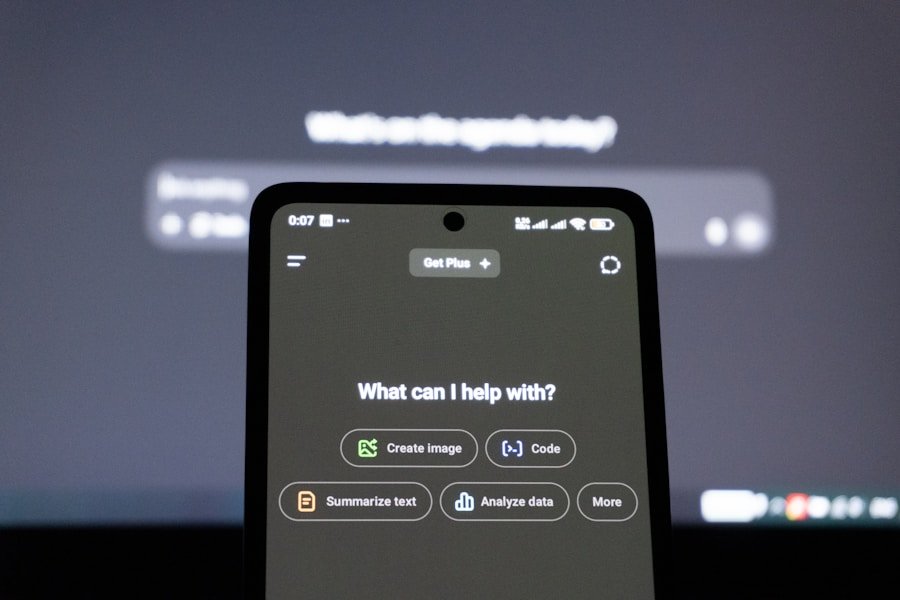

The future of conversational AI is here, and it’s largely being shaped by personalized chatbots. These aren’t your grandmother’s clunky automated systems. They’re intelligent, adaptable, and capable of understanding nuances, making them powerful tools for transforming customer experience from a chore into a collaborative dialogue. Imagine a digital assistant that truly knows your preferences, anticipate your needs, and speaks your language – that’s the promise of personalized conversational AI.
The Evolution of Conversational AI: From Simple Scripts to Sophisticated Spoken Word
Conversational AI, at its core, is about machines understanding and responding to human language. This field has come a long way from its early days.
The Dawn of Rule-Based Systems
In the beginning, chatbots were like puppets on strings. They operated on pre-programmed rules and keywords. If you said X, they responded with Y. This was akin to a simple flowchart, guiding users down predefined paths. While useful for very specific tasks, these systems lacked flexibility and could quickly become frustrating if a user deviated from the script.
The Rise of Machine Learning and Natural Language Processing
The real revolution began with advancements in machine learning (ML) and natural language processing (NLP). ML allows AI to learn from data, identifying patterns and improving its understanding over time. NLP, on the other hand, focuses on enabling computers to understand, interpret, and generate human language. This combination is what gives modern chatbots their ability to grasp context, sentiment, and even idiomatic expressions.
Understanding Intent: The Key to Meaning
A crucial development in NLP is intent recognition. Instead of just matching keywords, AI can now infer what a user wants to achieve. For example, a customer might say, “My internet is playing up again,” and the AI, powered by sophisticated intent recognition, understands they are experiencing a technical issue and require support, rather than just looking for information about “internet.”
Sentiment Analysis: Reading Between the Lines
Beyond just understanding what is being said, conversational AI is increasingly capable of understanding how it’s being said. Sentiment analysis allows chatbots to detect the emotional tone of a conversation – whether a customer is frustrated, happy, or neutral. This is vital for tailoring responses and escalating issues appropriately.
The Birth of Generative AI and Large Language Models (LLMs)
More recently, the advent of generative AI and LLMs like those powering this response has propelled conversational AI into an entirely new era. These models can not only understand but also create human-like text, leading to more fluid and natural interactions. This is like moving from a scripted play to an improvisational performance.
More Human-Like Dialogue
LLMs enable chatbots to generate responses that are not just grammatically correct but also contextually relevant and carry a certain natural flow. This reduces the robotic feel often associated with older AI systems.
Nuance and Context Preservation
Generative AI can better retain context across longer conversations, remembering previous turns and building upon them. This allows for more complex queries and a more satisfying, less repetitive user experience.
Personalization: The Game Changer for Customer Experience
Personalization isn’t just a buzzword; it’s the bedrock of effective customer engagement. Generic, one-size-fits-all interactions can feel cold and impersonal. Personalized chatbots, however, act like a seasoned concierge who remembers your name, your needs, and your preferences.
Building a Customer Profile
At the heart of personalization is the ability to build and leverage customer profiles. This involves collecting and analyzing data about a customer’s past interactions, preferences, and behaviors.
Data Sources: A Tapestry of Information
Customer profiles can draw from various sources: previous chat logs, purchase history, website browsing patterns, and even demographic information, if provided and consented to. This data paints a rich picture of the individual.
Dynamic Response Generation
Instead of pre-written responses, personalized chatbots can dynamically generate answers that are tailored to the individual. If a customer frequently buys a particular product, the chatbot might proactively offer related items or assistance with their existing purchase.
Anticipating Needs: Proactive Engagement
The ultimate goal of personalization is not just to react to customer requests but to anticipate them. Think of it as a gardener knowing when their plants need watering before they even show signs of wilting.
Predictive Analysis
By analyzing patterns in customer behavior and historical data, AI can predict future needs. A customer who frequently browses a specific product category might receive targeted recommendations or information about upcoming sales.
Contextual Recommendations
When a customer is interacting with the chatbot, the AI can use the insights from their profile to offer highly relevant recommendations. For a travel company, this might mean suggesting destinations based on past trips or stated interests.
Tailored Communication Styles
Personalization extends to the very way the chatbot communicates. Some users may prefer concise, direct answers, while others appreciate a more conversational and empathetic tone.
Adapting Tone and Language
Advanced chatbots can adapt their tone and language to match the user’s presumed communication style. This can be inferred from previous interactions or explicitly set preferences. This makes the interaction feel more like a conversation with a helpful human.
Brand Consistency with Individual Flair
While maintaining brand voice and consistency, personalized chatbots can inject a touch of individual warmth, making the customer feel seen and valued.
Revolutionizing Specific Customer Touchpoints
Personalized conversational AI isn’t a single solution; it’s a multifaceted tool that can enhance various stages of the customer journey.
Pre-Sales Engagement: Guiding the Decision Process
Before a customer even makes a purchase, personalized chatbots can act as expert guides.
Product Discovery and Recommendation
Instead of overwhelming customers with endless options, a chatbot can ask a few key questions and then curate a selection of products that genuinely match their needs and preferences. This is like having a personal shopper who understands your taste.
Answering FAQs in Real-Time
Common questions about products, shipping, or returns can be answered instantly by a personalized chatbot, freeing up human agents for more complex issues. The AI can recall previous interactions to provide context-specific answers, e.g., “Regarding the warranty for the XYZ model you purchased last year…”
Lead Qualification and Nurturing
For businesses, personalized chatbots can engage with potential leads, gather information, and qualify them before handing over to a sales representative, ensuring that sales teams focus on the most promising opportunities.
Post-Sales Support: Ensuring Satisfaction and Loyalty
The customer journey doesn’t end at the purchase. Personalized AI plays a critical role in post-sales support.
Proactive Issue Resolution
If a customer has a recurring issue, the chatbot can proactively reach out, offering solutions or checking in during the resolution process. This builds trust and shows the customer that their experience is important.
Personalized Troubleshooting
When a customer faces a problem, the chatbot can access their purchase history and previous support interactions to offer tailored troubleshooting steps, rather than generic advice. This is far more efficient than starting from scratch.
Onboarding and Product Adoption
For complex products or services, personalized chatbots can guide new users through the onboarding process, answering their specific questions and ensuring they get the most out of their purchase.
Customer Service: Efficiency and Empathy at Scale
Customer service departments are often the frontline of customer interaction, and personalized AI can significantly improve their effectiveness.
Faster Resolution Times
By handling routine queries and providing instant, accurate information, personalized chatbots drastically reduce wait times and resolve issues more quickly.
Empowering Human Agents
When a complex issue arises, the chatbot can gather all the necessary information and context from the customer before escalating to a human agent. This means the human agent can jump straight into problem-solving, armed with valuable insights.
Handling High Volumes with Consistency
During peak periods, personalized chatbots can handle an unprecedented volume of inquiries without compromising the quality or consistency of the service provided.
The Technology Under the Hood: AI Models and Architectures
The sophisticated capabilities of personalized chatbots are powered by advanced AI technologies. Understanding these components provides a clearer picture of how they function.
Natural Language Understanding (NLU) Models
NLU is the engine that allows AI to parse and interpret human language.
Intent Classification and Entity Extraction
These models identify the user’s goal (intent) and the key pieces of information (entities) within their request. For instance, in “Book a flight to London for tomorrow,” “book a flight” is the intent, and “London” and “tomorrow” are entities.
Coreference Resolution
This capability allows the AI to understand pronouns and references within a conversation. If a customer says, “I left my order number in the previous message. Can you check its status?” coreference resolution helps the AI connect “its” to “order number.”
Natural Language Generation (NLG) Models
NLG is responsible for crafting the AI’s responses.
Template-Based Generation
This is the simplest form, where pre-written templates are filled with dynamic information. It’s the foundation for many basic chatbots.
Statistical and Neural NLG
More advanced models learn from vast amounts of text data to generate more natural and contextually appropriate responses. LLMs fall into this category and represent the cutting edge.
Dialogue Management Systems
These systems are the orchestrators of the conversation.
State Tracking
The dialogue manager keeps track of the conversation’s current state, including what has been discussed, what information has been gathered, and what the next logical step is.
Policy Learning
This involves determining the best action for the chatbot to take at each turn of the dialogue, often learned through reinforcement learning to optimize for user satisfaction and task completion.
Machine Learning and Deep Learning Frameworks
The development of these AI models relies heavily on ML and deep learning frameworks.
TensorFlow and PyTorch
These are popular open-source libraries that provide the tools and infrastructure for building and training complex neural networks, which are the backbone of modern conversational AI.
Transfer Learning and Pre-trained Models
Leveraging pre-trained LLMs allows developers to build highly capable chatbots with less data and computational resources, significantly accelerating development.
Challenges and Considerations for the Future
| Metrics | Data |
|---|---|
| Customer Satisfaction | 85% |
| Response Time | 30 seconds |
| Conversion Rate | 20% |
| Retention Rate | 90% |
While the potential of personalized conversational AI is immense, there are still challenges and ethical considerations to address.
Data Privacy and Security
Collecting and using customer data requires robust privacy measures and transparent policies. Ensuring that data is handled securely and ethically is paramount.
GDPR and CCPA Compliance
Adhering to regulations like GDPR and CCPA is essential for businesses to build trust and avoid legal repercussions.
Anonymization and Pseudonymization Techniques
Employing techniques to obscure personal identifiers from data used for training and analysis is crucial for protecting user privacy.
Bias in AI Models
AI models can inherit biases present in the data they are trained on. This can lead to unfair or discriminatory outcomes.
Auditing and Debiasing Strategies
It’s important to actively audit AI models for bias and implement strategies to mitigate it, ensuring equitable treatment for all users.
Diverse Training Data
Using diverse and representative datasets for training is a fundamental step in preventing bias.
The Human Touch: Knowing When to Escalate
While AI can handle many tasks, there are times when human intervention is indispensable.
Emotional Intelligence and Empathetic Responses
Humans excel at complex emotional understanding and nuanced empathy, which can be difficult for AI to fully replicate.
Complex Problem-Solving
For truly unique or highly sensitive issues, the intuition and experience of a human agent are often irreplaceable.
Continuous Learning and Adaptation
The world and customer needs are constantly evolving, so conversational AI systems must be designed for continuous learning.
Real-time Feedback Loops
Implementing mechanisms for gathering and acting on user feedback is crucial for ongoing improvement.
Model Retraining and Updates
Regularly retraining and updating AI models with new data is necessary to maintain their accuracy and relevance.
In conclusion, the future of conversational AI is intrinsically linked to personalization. By understanding individual needs, preferences, and behaviors, chatbots are evolving from simple tools into sophisticated partners that can genuinely enhance the customer experience, making interactions more efficient, effective, and ultimately, more human.
FAQs
What is Conversational AI?
Conversational AI refers to the use of artificial intelligence and natural language processing to enable machines to understand, process, and respond to human language in a conversational manner. This technology is used in chatbots, virtual assistants, and other applications to facilitate human-like interactions.
How are Personalized Chatbots Revolutionizing Customer Experience?
Personalized chatbots are revolutionizing customer experience by providing tailored and relevant interactions with customers. These chatbots use data and insights to understand individual preferences, anticipate needs, and deliver personalized recommendations, ultimately enhancing customer satisfaction and loyalty.
What are the Benefits of Conversational AI in Customer Service?
Conversational AI in customer service offers several benefits, including 24/7 availability, faster response times, consistent and accurate information delivery, cost savings for businesses, and the ability to handle a high volume of customer inquiries simultaneously.
What are the Challenges of Implementing Conversational AI?
Challenges of implementing conversational AI include ensuring natural and human-like interactions, addressing privacy and security concerns, integrating with existing systems and data sources, and continuously improving the chatbot’s performance through machine learning and user feedback.
What is the Future Outlook for Conversational AI?
The future of conversational AI is expected to involve more advanced natural language processing, improved contextual understanding, seamless integration across channels, and the ability to handle complex and sensitive customer interactions. Additionally, the use of conversational AI is likely to expand into new industries and applications beyond customer service.