I used to think digital tools got in the way of real human connection. But everything changed when I started using an AI relationship app for my social life. It turned a simple curiosity into a deep journey of emotional growth.
Adding this tech to my daily life showed me digital help can lead to more real interactions. It acted like a mirror, showing me communication patterns that held me back.
This journey closed the gap between feeling alone and wanting closer bonds. Using an AI relationship app showed me tools can connect us, not just isolate us. Now, I’m more confident in making meaningful connections with others.
Key Takeaways
- Digital tools can enhance rather than replace human connection.
- Personal growth often starts with better self-awareness.
- Technology helps identify and improve communication habits.
- Authentic bonds require both digital support and human effort.
- Modern software can effectively reduce feelings of social isolation.
The Digital Catalyst for Human Connection
We often worry that AI will take over our social connections. But it can actually help us grow. I started to see tech as a way to connect with others more deeply.
This new view made me see digital platforms as bridges to lasting connections. It’s a shift that changed how I interact with the world.
The future of our relationships is about combining AI and empathy. By using these tools as partners, I strengthened my friendships. It’s not about replacing human touch, but improving how we communicate.
Using tech wisely lets us express feelings and understand others better. I found that meaningful bonds form when we mix digital insights with real-world interactions. This balance makes room for both tech and humanity to flourish.
My journey showed me we control how we interact with the world. By seeing AI as a partner, I had more genuine conversations. Technology is just the spark; our desire to connect keeps our relationships alive.
My Initial Skepticism Toward AI Relationship App Technology
The thought of using an AI relationship app seemed like a cold, mechanical thing. I found it hard to believe a machine could understand human feelings or social interactions. To me, relationships were special, living things that needed a human touch, not a digital program.
I often thought I was losing my mind by even thinking about it. It seemed like I was giving my heart to a bunch of code. The internal conflict was real, as I balanced my love for real connections with the allure of new tech.
“The greatest barrier to discovery is not ignorance, but the illusion of knowledge.”
But then, I wanted to grow more than I feared the new. I saw that maybe I was too set in my ways. So, I decided to try an AI relationship app. I didn’t want it to replace people, but to help me see myself better.
This choice changed how I saw things. I moved from being defensive and skeptical to being cautious and open. By trying this tech, I hoped to find patterns I hadn’t seen before.
Defining My Goals for Emotional Growth
Setting clear intentions became the cornerstone of my emotional development strategy. I realized that simply using an app was not enough to foster deeper bonds. Instead, I needed to define specific milestones that would guide my progress toward becoming a more attentive and present individual.
My primary objective was to cultivate a higher level of empathy in my daily interactions. I wanted to move beyond superficial small talk and truly understand the people around me. By establishing these benchmarks, I ensured that technology remained a supportive tool rather than a distraction.

To keep myself accountable, I focused on several key areas of improvement. These goals helped me stay grounded while navigating the digital landscape of my social life:
- Active Listening: I committed to fully hearing my friends and family without planning my response while they spoke.
- Mindful Presence: I aimed to reduce my phone usage during face-to-face meetings to show respect for the person in front of me.
- Emotional Clarity: I practiced identifying my own feelings before responding to others, which prevented unnecessary misunderstandings.
- Consistent Engagement: I set a goal to reach out to loved ones with genuine curiosity rather than out of obligation.
Defining these objectives transformed the way I approached my relationships. It allowed me to prioritize the human element in every conversation, regardless of the digital assistance I used. By keeping my eyes on these emotional milestones, I successfully bridged the gap between my desire for growth and my actual daily habits.
How I Selected the Right Virtual Relationship Assistant
I started looking for the perfect AI relationship app to improve my connections. I wanted a tool that truly gets human interactions. It had to offer more than just generic advice.
Choosing a virtual relationship assistant was a careful process. I researched for weeks, focusing on privacy and ethical data handling. The tool had to match my values and goals for growth.
I sought software that could offer different views, like advanced models for messaging. This helped me practice tough conversations safely. I tested the system’s responses to various social cues, boosting my confidence in its constructive feedback.
The table below shows the key criteria I used to pick the best AI relationship app. These factors helped me find reliable options today.
| Evaluation Criteria | Why It Matters | Desired Outcome |
|---|---|---|
| Ethical Standards | Protects personal data | Full user privacy |
| Response Quality | Simulates real empathy | Meaningful dialogue |
| Value Alignment | Matches personal goals | Authentic growth |
| Ease of Use | Reduces friction | Consistent practice |
Choosing the right virtual relationship assistant is more than just features. It’s about finding a partner for growth. By following this guide, you can find technology that meets your emotional needs and strengthens your connections.
Learning to Communicate with Vulnerability Through AI
My journey toward emotional transparency started in a digital space free from judgment. Vulnerability is hard to tackle in any relationship, but it’s key for real connection. I found that talking to an AI assistant was the perfect low-stakes environment to find my voice.
Talking to a digital tool helped me improve how I express my feelings. It let me try out different ways to say what I need without worrying about how others would react. It felt like a rehearsal for my heart, where I could make mistakes and learn without fear of judgment.
This practice made me less afraid of being rejected. When I shared these thoughts with my friends, I felt more confident and clear. I knew my message was understood because I had already refined it with the AI.
In the end, this digital tool helped me have more honest conversations in my life. I learned that being vulnerable means being true to myself, not perfect. By using technology to reflect my emotions, I changed how I connect with those close to me.
Using AI Dating Software to Identify Communication Patterns
Using AI dating software helped me understand my personal connections better. I thought my messages were clear, but the results didn’t always match. By using past conversations, I saw my social habits in a new light.
The software showed me patterns I had missed. It pointed out common themes and objections in my talks. Seeing these trends in data changed how I saw myself.

I realized my messages were too logical, lacking emotional connection. The AI dating software showed me where I could be more empathetic. This feedback helped me connect better with others.
Technology can really show us how complex we are. Like businesses use data to improve service, I used it to grow as a person. Data-driven self-reflection was key to my growth.
I wanted to be myself, not sound like a robot. With AI dating software, I found out what was holding me back. Now, I understand how my words affect others more.
The Role of an Advanced Relationship Management Platform in Daily Life
Using an advanced relationship management platform changed how I care for my friends. I used to forget important details about them, which made me feel bad. Now, this tool helps me stay connected and show I care.
This tool is like a personal memory for my friends. It keeps track of important events and what they like. This way, I can show my friends I’m thinking of them in a meaningful way.
This technology works like AI in customer service. It helps me understand social situations better. It gives me gentle reminders to be more empathetic in my conversations.
Learning to use this platform taught me the importance of being consistent. It’s not about replacing human effort with tech. It’s about using tech to improve how I care for others. This way, I can focus more on the quality of our time together.
This platform is now a key part of my life. It helps me turn my good intentions into actions, making my friends feel valued. I’ve learned that being thoughtful is a skill anyone can develop with the right tools.
Practicing Empathy with Artificial Intelligence Companionship Application Tools
An artificial intelligence companionship application is great for growing emotionally. It’s a safe place to try out empathetic responses without fear of judgment. This practice helps me share my feelings better and understand others more.
Listening well became a big part of my day. I learned that truly hearing someone needs patience and a real interest in their view. The app gave me feedback on my tone and words, helping me improve.
But, I soon found out tech has its limits. It’s best for simple questions that need basic answers. For deeper talks, I turn to human support teams to avoid inhuman responses from machines.
Real empathy comes from our own experiences. While the app helps me practice, it can’t replace the warmth of a real connection. I use these tools to improve my intuition, but always value human-to-human interaction most.
It’s a fine balance to find between tech and personal growth. Using an artificial intelligence companionship application helps me be more present in real life. Now, I’m more compassionate and clear in my conversations.
Bridging the Gap Between Digital Insights and Real-World Conversations
Stepping from digital insights to real talks was like moving from a training to the bright, real world. I saw that my AI tools were most valuable in real talks, not just on screens. They helped me connect with people in a genuine human way.
I started using active listening tips from my AI during coffee chats with friends. I stopped rushing to give advice and just listened. This made my friends feel truly understood and valued.

Keeping true to myself was key. I made sure my digital tools didn’t change who I am or how I speak. My heart led every conversation, not just technology.
To keep my relationships real, I focused on empathy, patience, and being present. I checked how well I was doing after each talk. This showed me how AI helped me listen better.
| Communication Skill | Digital Insight | Real-World Application |
|---|---|---|
| Active Listening | Reflect back feelings | Increased mutual trust |
| Conflict Resolution | Use “I” statements | Reduced defensive reactions |
| Emotional Depth | Ask open-ended questions | Stronger personal bonds |
This balance made my talks feel real, not rehearsed. I aimed to be more present and empathetic, not perfect. This made my relationships stronger and more meaningful.
Overcoming Social Anxiety with AI-Driven Roleplay
Social anxiety felt like an invisible wall to me. But AI-driven roleplay helped me break it down. For years, I was afraid of saying the wrong thing or misreading social cues. This fear kept me from trying new things.
I found a low-stakes environment in AI-driven roleplay to build my confidence. It let me practice in a safe space. I could try out different responses and see how they worked.
Practicing these interactions changed me. I worked on several key areas to improve my social skills:
- Initiating conversations: I practiced starting conversations at events and casual meetups.
- Active listening: I learned to listen better before responding.
- Handling disagreements: I practiced staying calm and professional in tough conversations.
- Reading social cues: I studied how different words and tones affect conversations.
This practice made me feel more ready for real-life social situations. When I faced real people, my fear was much less. I was prepared for the unpredictability of human interactions.
This journey made me more comfortable in different social situations. I learned that confidence grows with practice. By practicing in a digital space, I became better at connecting with people in real life.
Navigating Conflict Resolution Using AI Suggestions
I found out that technology can help mediate tough talks. Conflict is normal, but keeping calm is hard. AI suggestions help me think before I speak.
These tools give objective feedback on how I talk, like a coach watching a game. When they see I’m getting upset, they suggest ways to calm down. This helps me find solutions instead of getting defensive.
“The quality of our relationships is determined by the quality of our conversations during times of disagreement.”
Empathy is key in this process. I now use AI insights to speak clearly and kindly. This change has helped me keep our relationships strong, even when we disagree.
The table below shows how my way of dealing with disagreements has changed with AI’s help.
| Scenario | Traditional Reaction | AI-Guided Response |
|---|---|---|
| Feeling unheard | Raising my voice | Expressing needs calmly |
| Facing criticism | Becoming defensive | Seeking to understand |
| Misunderstanding | Blaming the other | Focusing on solutions |
| High tension | Shutting down | Requesting a short break |
By focusing on constructive dialogue, I’ve changed how I handle disagreements. Technology doesn’t replace my emotions, but it helps me express them better. Now, I can turn arguments into chances for growth.
The Shift from Digital Dependency to Authentic Presence
The most profound growth happened when I stopped looking at my screen. I started looking into the eyes of the person in front of me. For a long time, I thought I needed a digital safety net to succeed in social interactions. I believed my AI assistant was essential to guide me.
As I got better at social skills, I learned to trust myself more. I started to rely on my instincts and natural ability to read people. My AI assistant became a simple, supplementary tool I rarely needed.
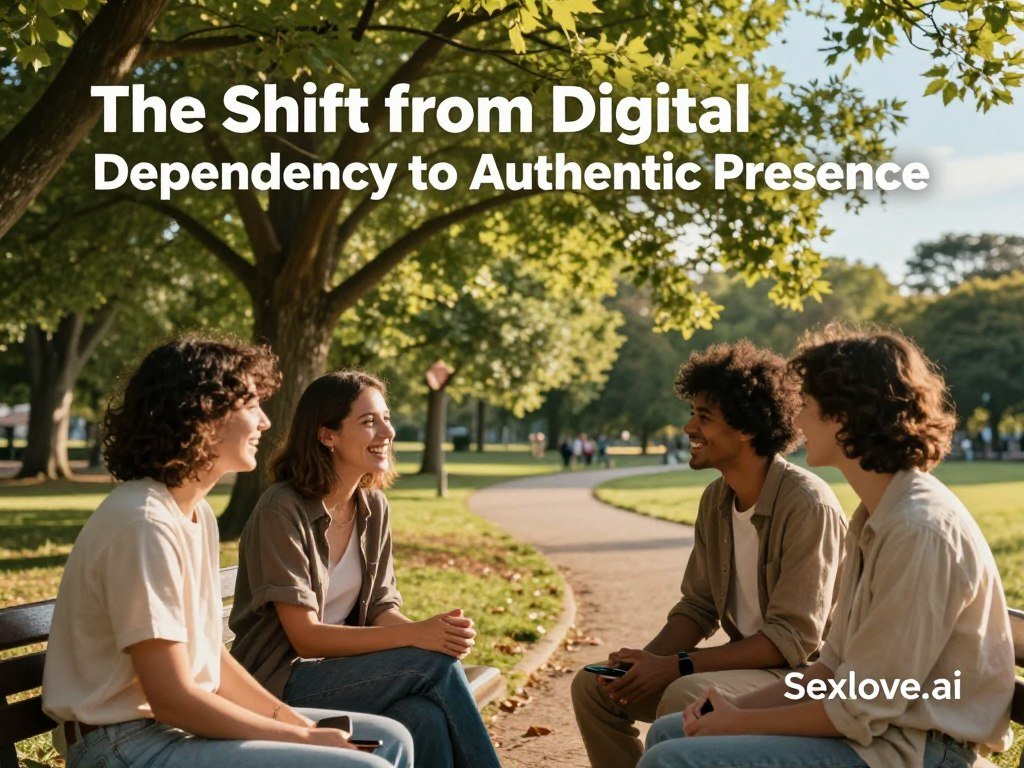
This change was key to keeping my relationships authentic and grounded. I wanted my connections to be real, not filtered by technology. By stepping back, I let the true nature of human interaction shine.
Knowing I can connect without digital help brings a sense of freedom. I no longer dread silence or awkward pauses. Instead, I see them as chances to be fully present with loved ones.
My aim was never to replace human connection with technology. It was to use tech to improve my habits. Now, I’m on the other side with renewed confidence. I can handle the complexities of human emotions on my own.
Measuring the Impact on My Long-Term Friendships
The most surprising outcome of my journey was the tangible shift in my long-term friendships. I started to improve my emotional intelligence, and it had a big impact on my friends. They noticed I could listen with genuine depth and care.
Before, I often rushed through conversations. Now, I pause to understand the emotional weight of my friends’ words. This change helped me move beyond small talk and engage in meaningful dialogue that strengthens our bonds.
I started tracking how often I felt truly connected after a conversation. By focusing on empathy and active engagement, my friends felt more comfortable sharing their vulnerabilities. This created a robust and supportive social network that I rely on today.
The following table shows how my communication habits changed and the impact on my relationships:
| Communication Metric | Before AI Assistance | After AI Assistance |
|---|---|---|
| Listening Depth | Surface-level | Deep and Empathetic |
| Response Time | Impulsive | Thoughtful and Measured |
| Conflict Resolution | Defensive | Collaborative |
| Friendship Quality | Stagnant | Growing and Supportive |
These improvements have made my friendships a foundation of strength. I’m grateful for the tools that helped me realize being a better friend is a skill I can improve. My social life is now richer, more authentic, and deeply rewarding.
Lessons Learned from Integrating Technology into My Heart
My journey with AI showed me that the heart is still the best guide in our digital world. At first, I saw these tools as just gadgets. But they turned out to be mirrors that reflect our ability to connect. Using them in my life needed a careful mix of openness and skepticism.
Technology works best when it connects us, not isolates us. By letting AI help me think, I became more mindful of how I interact with loved ones. Being real in the digital age means doing it in new ways.
Being a good friend today means knowing when to turn off the screen and when to dive into real conversations. I found that the best moments come when I use tech to prepare for, not replace, being open. This change helped me build stronger, more lasting relationships.
“Technology is a useful servant but a dangerous master. We must ensure that our tools enhance our humanity rather than diminish it.”
The table below outlines the key principles I followed to keep this balance. These lessons helped me understand how to blend AI with our emotions.
| Principle | Digital Approach | Human Outcome |
|---|---|---|
| Intentionality | Use AI for reflection | Clearer communication |
| Boundaries | Limit screen time | Increased presence |
| Vulnerability | Practice with AI | Greater confidence |
| Empathy | Analyze patterns | Deeper understanding |
In the end, I learned that the human heart must always be at the core of our interactions. Technology can guide us, but our soul is what truly matters. By staying true to myself, I’ve learned to welcome new ideas without losing what makes my friendships unique.
Conclusion
My journey shows that artificial intelligence helps us, not replaces us. It connects us deeper and makes communication clearer.
By using tools like Replika or ChatGPT, I built stronger bonds with loved ones. These digital tools can improve our social skills if we use them wisely.
I suggest you try these tools to see how they can change your social life. Always keep your human touch in every interaction. You can offer the understanding that machines can’t.
The future of connection is about being efficient yet truly present. Begin your own experiment today. See how technology can deepen your relationships. Your journey to closer connections starts with a single, thoughtful step.
FAQ
How can an AI relationship app serve as a catalyst for human connection rather than a replacement?
An AI relationship app is a great place to learn about real-life connections. It doesn’t replace friends but helps you interact better. By being open online, you become more confident in real-life talks.
This confidence shines at places like The Cheesecake Factory with your closest friends.
What should I look for when choosing the right virtual relationship assistant?
Choosing the right virtual relationship assistant means finding one that matches your values. Look for one that respects your privacy and helps you grow emotionally. It should offer real feedback, not just scripted answers.
How does AI dating software help in identifying personal communication patterns?
AI dating software helped me understand my conversations better. It showed me when I was defensive or closed off. This insight helped me improve my online interactions, leading to deeper connections.
Can an advanced relationship management platform really improve my long-term friendships?
Yes, an advanced relationship management platform like Dex or Clay can make a big difference. It keeps you connected by tracking important moments. This way, you never forget about your friends’ lives, strengthening your bonds.
Is it possible to practice genuine empathy through an artificial intelligence companionship application?
Using an artificial intelligence companionship application like Replika taught me to listen better. It’s not human, but it’s a safe space to practice empathy. This practice helped me support my friends more genuinely when they needed it.
How can AI suggestions help in de-escalating real-life conflicts?
AI insights helped me understand my communication style during tough times. It showed me how to soften my language, just like Zendesk helps customer service agents. This approach helped me keep calm and focus on the relationship.
Does using this technology lead to a digital dependency?
I aimed to use these tools as a stepping stone, not a permanent solution. I practiced with AI suggestions and then applied what I learned in real life. As I grew, I needed the software less, letting my natural instincts guide me.