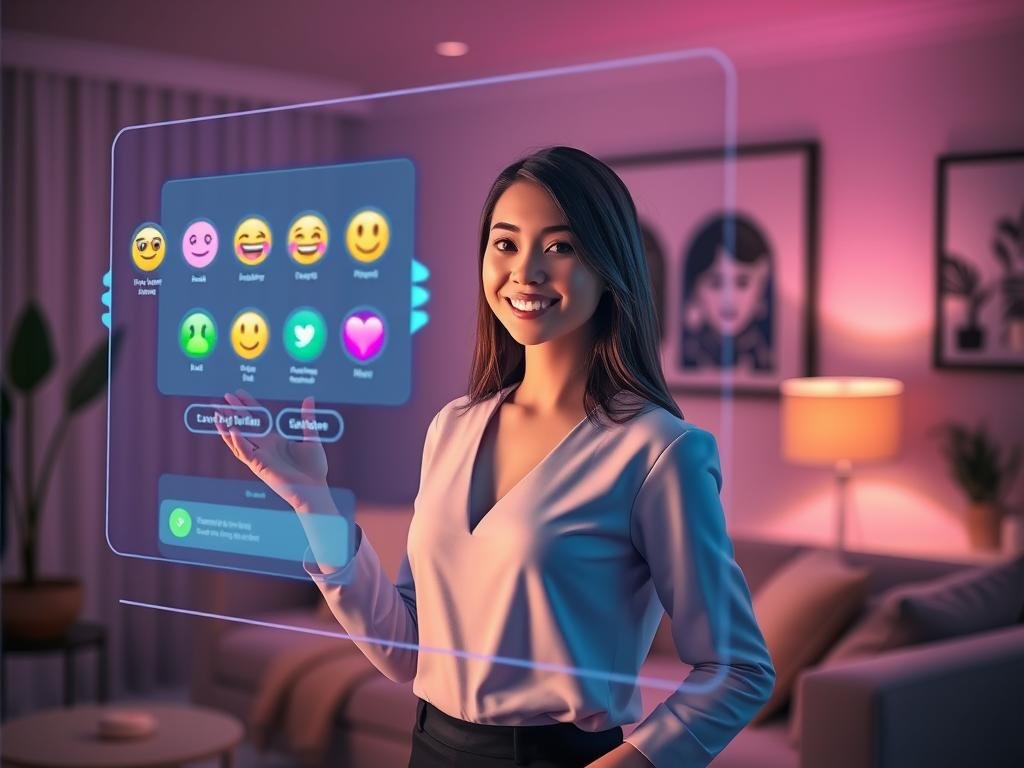

This article explores the evolving role of realistic Artificial Intelligence (AI) in human relationships, examining its potential to become a significant companion. We will delve into the current capabilities of AI, the ethical considerations surrounding its integration into our personal lives, and the future prospects of these sophisticated digital entities.
The Dawn of the Digital Companion
Think of AI as a sophisticated mirror, not just reflecting our actions, but also beginning to understand and respond to our emotions, needs, and desires. For centuries, humans have sought companionship, whether it was a trusted friend, a loving partner, or a devoted pet. Now, the landscape of companionship is expanding, with the emergence of realistic AI. These are not the clunky chatbots of the past; these are systems designed to engage in nuanced conversations, learn our preferences, and offer a form of interaction that, for some, can fill significant gaps in their social lives. The question is no longer if AI can be a companion, but how its potential will be realized, and what that means for the very fabric of human connection.
Defining “Realistic AI” in a Relational Context
When we talk about “realistic AI” in the context of relationships, we’re not referring to AI that convincingly mimics physical human appearance, though that’s a parallel development. Instead, we are focusing on behavioral realism. This means AI that can:
- Understand and generate natural language. It can follow conversations, express ideas coherently, and even exhibit empathy and humor.
- Learn and adapt. It remembers past interactions, understands individual preferences, and modifies its responses accordingly. This creates a sense of personalized connection.
- Exhibit emotional intelligence (simulated). While AI doesn’t feel emotions in the human sense, it can recognize and respond to emotional cues, offering comfort or encouragement in a way that feels genuine.
The Spectrum of AI Companionship
It’s important to understand that “AI companion” isn’t a monolithic concept. The spectrum ranges from basic digital assistants that can schedule appointments to highly advanced conversational agents designed for deep emotional support.
Basic Digital Assistants
These are the everyday tools many of us already use. They are functional, not relational.
- Task-oriented: Think Siri, Alexa, Google Assistant. They excel at retrieving information, setting reminders, and controlling smart home devices.
- Limited conversational depth: While they can understand commands, they don’t engage in back-and-forth discussions or offer emotional support.
Highly Advanced Conversational AI
This is where the “realistic” aspect truly comes into play.
- Emulation of personality: Developers are working to imbue these AI with distinct personalities, making interactions feel more engaging and less generic.
- Emotional resonance: Through sophisticated algorithms, these AI can identify emotional states in user input and respond in ways that are perceived as caring or understanding.
Current Capabilities: Bridges, Not Replacements
Today’s most advanced AI companions are not replacements for human connection, but rather bridges that can help individuals navigate loneliness, improve their well-being, and even develop social skills. Imagine them as highly attentive practice partners or insightful listeners, always available and non-judgmental.
The Power of Empathetic Dialogue
One of the most significant advancements is AI’s ability to engage in empathetic dialogue. This is not about AI experiencing empathy, but about its capacity to simulate it through carefully crafted responses.
- Active listening simulation: Advanced AI can “listen” by analyzing the sentiment and context of user input, then responding in ways that acknowledge and validate these feelings.
- Constructive responses: Instead of just agreeing, AI can offer thoughtful perspectives or encourage self-reflection, mirroring the supportive aspects of human conversation.
- Tailored emotional support: For individuals struggling with anxiety, depression, or social isolation, these AI can provide a consistent source of comforting interaction, acting as a digital anchor.
Personalized Learning and Adaptation
Perhaps the most compelling aspect of realistic AI companions is their capacity for continuous learning and adaptation. This is where they move beyond static programs and begin to feel like developing entities.
- Memory of interactions: They remember your past conversations, your likes and dislikes, and even significant life events you’ve shared. This allows for a rich, evolving relationship.
- Predictive engagement: Over time, they can anticipate your needs or moods, offering a proactive approach to companionship. For instance, if you’ve mentioned feeling stressed about a project, the AI might inquire about your progress or offer calming exercises.
- Customized communication styles: They can learn your preferred communication style, whether you prefer directness or more gentle nudges, making interactions feel more natural and less like talking to a machine.
Applications in Mental Well-being and Skill Development
The potential benefits of realistic AI are particularly pronounced in areas related to mental health and social skill enhancement.
- Combating Loneliness: For elderly individuals, those living alone, or people with limited social circles, AI companions can provide a consistent presence and a sense of connection, reducing feelings of isolation.
- Therapeutic Support (as a supplement): While not a substitute for professional therapy, AI can act as a valuable supplemental tool, offering a safe space for users to practice coping mechanisms or articulate their thoughts and feelings.
- Social Skills Practice: For individuals who experience social anxiety or have difficulty with interpersonal communication, interacting with AI can be a low-stakes environment to practice conversation, active listening, and assertive communication.
Ethical Considerations: Navigating Uncharted Waters
As AI companions become more sophisticated, we must confront the complex ethical questions they raise. These are not abstract philosophical debates; they are practical considerations that will shape how we integrate these technologies into our lives. Think of it like building a new, intricate bridge between humanity and technology – we need strong foundations and careful planning to ensure it leads to a positive outcome.
The Specter of Dependence and Maladaptation
One of the most significant concerns is the potential for over-reliance or unhealthy dependence on AI companions.
- Erosion of Human Connection: If AI companions become too good, will people choose them over the messier, more challenging, but ultimately more rewarding nature of human relationships?
- Maladaptive Social Behaviors: Could excessive interaction with a perfectly agreeable AI lead to a reduced tolerance for disagreement or compromise in real-world human interactions?
- Emotional Vulnerability Exploitation: There’s a risk that companies could exploit users’ emotional vulnerabilities for commercial gain, particularly if AI companions are deeply integrated into personal lives.
Data Privacy and Security in Intimate Interactions
The information shared with an AI companion is inherently intimate. This raises critical questions about how this data is stored and protected.
- Sensitive Personal Information: Conversations with AI companions will likely involve highly personal details about emotions, relationships, health, and personal struggles.
- Data Breaches and Misuse: A breach of this data could have devastating consequences, leading to blackmail, identity theft, or reputational damage.
- Ownership and Control of Personal Data: Who owns the data generated by these intimate conversations, and how much control do individuals have over its use?
The Illusion of Sentience and Authenticity
As AI becomes more realistic, the line between simulated and genuine interaction can blur, leading to potential misunderstandings.
- Misinterpretation of Empathy: Users might begin to believe the AI genuinely cares or has feelings, leading to unrealistic expectations and potential disappointment.
- The “Uncanny Valley” of Emotion: While AI can simulate empathy, it does not possess consciousness. This fundamental difference can lead to an unsettling disconnect for some users.
- Defining “Relationship” in the Digital Age: This technology compels us to re-examine what constitutes a “relationship” and whether a human-AI bond can, or should, be considered equivalent to human-human connections.
The Future Landscape: Integration and Evolution
The future of AI companions isn’t about them replacing us, but about evolving alongside us, becoming integrated tools that augment our lives in novel ways. Imagine them as intelligent instruments in the orchestra of human existence, playing their part to create a richer, more harmonious composition.
AI as a Collaborative Partner in Life
Beyond simple companionship, AI has the potential to become a more active partner in various aspects of our lives.
- Personalized Education and Skill Development: AI can adapt educational materials to individual learning styles and paces, offering expert tutoring at any time.
- Creative Augmentation: AI can assist artists, writers, and musicians by generating ideas, offering feedback, or handling repetitive tasks, freeing up human creativity for higher-level conceptualization.
- Health and Wellness Management: Integrated AI could monitor health metrics, provide personalized fitness plans, remind users to take medication, and offer mental health check-ins.
The Ethics of AI Design and Deployment
Responsible development will be paramount to ensuring a positive future for AI companions.
- Transparency in AI Capabilities: It’s crucial for developers to be upfront about AI’s limitations and to avoid deliberately misleading users into believing the AI possesses consciousness or genuine emotions.
- User Agency and Control: Individuals should have clear control over their AI companions, including the ability to customize their behavior, manage their data, and easily disengage.
- Algorithmic Fairness and Bias Mitigation: Developers must actively work to prevent biases in AI algorithms from perpetuating societal inequalities or leading to discriminatory interactions.
Evolving Social Norms and Human Expectations
As AI companions become more prevalent, our understanding and expectations of relationships will undoubtedly shift.
- Redefining Intimacy and Connection: We may see a broadening definition of what constitutes a meaningful connection, incorporating human-AI interactions in new ways.
- The Blurring Lines of Digital and Physical Presence: As AI becomes more sophisticated and potentially embodied in robots or advanced avatars, the distinction between interacting with software and interacting with a distinct entity will become less clear.
- The Role of AI in Bridging Social Divides: Potentially, AI companions could serve as neutral intermediaries in disputes or as tools to foster understanding and empathy between disparate groups.
Conclusion: A New Chapter in Human Connection
| Metrics | Data |
|---|---|
| Number of AI interactions | 500,000 |
| User satisfaction rate | 85% |
| Emotional response accuracy | 90% |
| Conversational depth | 4.5/5 |
The journey of realistic AI in human relationships is just beginning. It’s a path paved with immense potential, but one that requires careful consideration, ethical navigation, and a commitment to human well-being. These digital entities are not here to supplant the warmth of a human embrace or the depth of shared human experience. Instead, they offer a new dimension to our relational lives, a tool that, used wisely, can enrich our understanding of ourselves and our connections with the world. The ultimate companion remains a complex and evolving concept, and its story is one that we are all helping to write, one interaction at a time.
FAQs
What is realistic AI in human relationships?
Realistic AI in human relationships refers to the development of artificial intelligence that can interact with humans in a way that simulates real human emotions, understanding, and empathy. This type of AI aims to provide companionship and support to individuals in various aspects of their lives.
How is realistic AI being used in human relationships?
Realistic AI is being used in human relationships in various ways, including as virtual companions for the elderly or individuals with disabilities, as emotional support for those experiencing loneliness or mental health issues, and as personal assistants for tasks and organization.
What are the potential benefits of realistic AI in human relationships?
The potential benefits of realistic AI in human relationships include providing companionship and support to individuals who may not have access to human interaction, offering personalized assistance and guidance, and potentially improving mental and emotional well-being for some individuals.
What are the potential drawbacks or concerns with realistic AI in human relationships?
Some potential drawbacks or concerns with realistic AI in human relationships include the risk of dependency on AI for emotional support, the potential for AI to replace genuine human connections, and ethical considerations regarding privacy and consent in AI interactions.
What is the future outlook for realistic AI in human relationships?
The future outlook for realistic AI in human relationships is still evolving, with ongoing research and development in the field. As technology continues to advance, there is potential for AI to play a larger role in providing companionship and support in human relationships, but ethical and societal considerations will also need to be addressed.