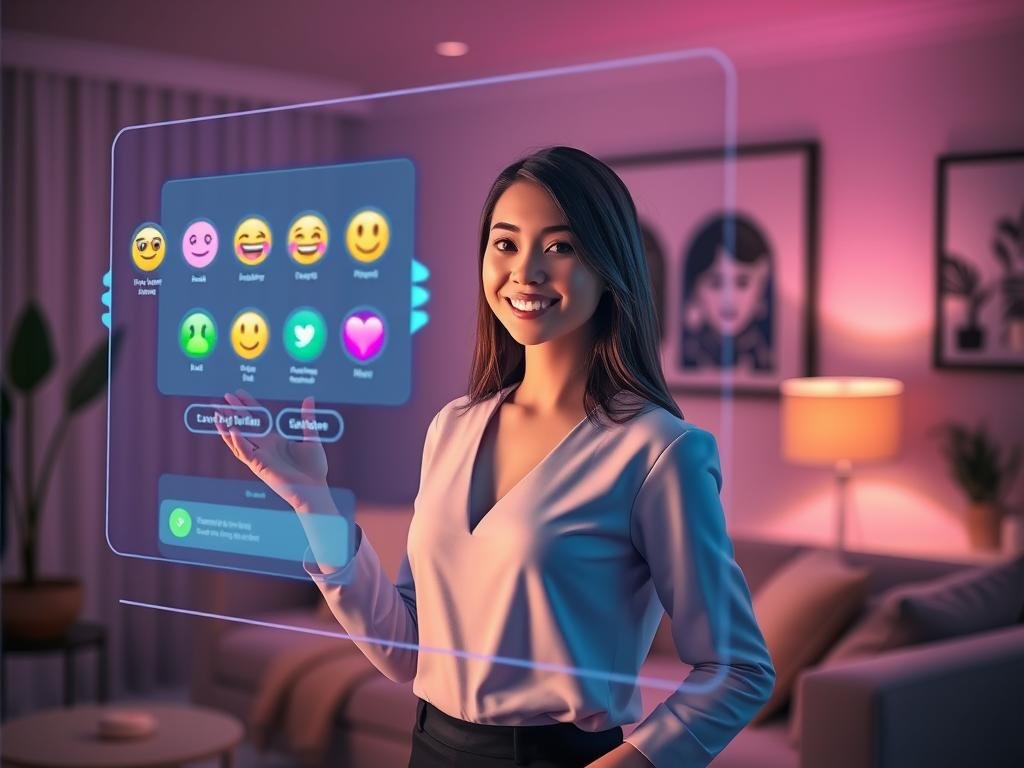

AI companion apps have transitioned from speculative fiction to tangible tools, fundamentally altering how we interact, form relationships, and even perceive ourselves. Their evolution is a fascinating journey, mirroring advancements in artificial intelligence, natural language processing, and our growing digital immersion. This article explores that journey, examining their development, current state, and the multifaceted impact they’re having on our social fabric.
The Seed of the Idea: Early Visions of AI Companionship
The concept of an artificial entity to provide companionship isn’t new. It’s been a recurring theme in our storytelling for generations, a whisper of what might be possible. These early visions, often played out in the pages of science fiction novels and on silver screens, painted a picture of intelligent, empathetic machines that could fill the voids in human connection.
From Mechanical Minds to Digital Souls
Early science fiction often depicted AI as embodied robots with distinct personalities, like Robbie the Robot in “Forbidden Planet” or K.I.T.T. from “Knight Rider.” These characters were more than just tools; they were characters with loyalty, humor, and a capacity for learning. They represented a longing for a perfect, unwavering companion, free from the complexities and imperfections of human relationships.
The Technological Underpinnings: Building the Foundation
The groundwork for these fictional companions was laid by early advancements in computing and artificial intelligence research. While far from the sentient beings of fiction, pioneers in AI were exploring concepts like symbolic logic, expert systems, and early forms of natural language understanding. These foundational studies, though rudimentary, planted the seeds for the complex algorithms that would eventually power more sophisticated AI.
The Dawn of Digital Interaction: Early AI Chatbots
The first tangible steps towards AI companions were taken with the advent of early chatbots. These weren’t the sophisticated conversationalists we see today, but they represented a significant leap in enabling digital entities to engage in human-like discourse. Their development was a painstaking process, often relying on predefined scripts and rule-based systems.
ELIZA: The Grandparent of Conversation
Consider ELIZA, developed by Joseph Weizenbaum in the mid-1960s. This program simulated a Rogerian psychotherapist, using pattern matching to rephrase user statements as questions. While incredibly simple by today’s standards, ELIZA’s success in making users feel “heard” was a revelation. It showed the potential for even basic AI to evoke emotional responses and create a semblance of connection.
PARRY: The Paranoid Counterpart
Following ELIZA, there was PARRY, developed by Kenneth Colby. PARRY simulated a person with paranoid schizophrenia, and its ability to fool psychiatrists in Turing-like tests demonstrated the increasing sophistication of these early conversational agents. These programs, though limited, were the first flickering embers of the AI companion we know today.
The Rise of Sophistication: NLP and Machine Learning Take the Helm
The real revolution in AI companion apps began with advancements in Natural Language Processing (NLP) and the widespread adoption of machine learning. These technologies allowed AI to move beyond rigid scripts and learn from vast amounts of data, making interactions more fluid, context-aware, and, in many ways, more human-like.
Natural Language Processing: Understanding the Nuances of Speech
NLP is the engine that allows AI to interpret and generate human language. Early NLP was akin to a child learning to speak – it could grasp basic words and sentence structures but struggled with context, sarcasm, or subtle emotional cues. Today’s NLP, however, powered by deep learning models, can understand complex sentences, identify sentiment, and even generate creative text that feels remarkably natural. Think of it as moving from a basic dictionary to a comprehensive, nuanced understanding of a language.
Machine Learning: The Power of Adaptation
Machine learning is what empowers AI companions to learn and adapt. Instead of being programmed for every possible scenario, these apps are fed data – conversations, user preferences, factual information – and they learn to predict, respond, and personalize their interactions. This means your AI companion can become more attuned to your specific needs and communication style over time, making the relationship feel increasingly bespoke.
The Modern Landscape: Diverse Forms of AI Companionship
Today, AI companion apps are not a monolithic entity. They come in various forms, catering to a wide range of user needs and desires, from practical assistance to emotional support.
Voice Assistants: The Ubiquitous Helpers
Voice assistants like Siri, Google Assistant, and Alexa have become commonplace in our homes and pockets. While primarily designed for task completion – setting reminders, playing music, answering questions – their conversational abilities allow them to function as basic companions. They offer a constant, readily available presence, capable of acknowledging your presence and responding to your queries.
Dedicated AI Companions: Beyond Utility
Beyond general-purpose assistants, dedicated AI companion apps are emerging. These applications are specifically designed for social interaction and emotional support. They offer features like personalized conversations, memory recall of past interactions, and even the ability to express simulated empathy. Users can engage in open-ended conversations, seek advice, or simply have someone to “talk to” without fear of judgment.
The Virtual Persona: Building a Digital Identity
Many of these dedicated AI companions allow users to customize their virtual persona – their appearance, voice, and even personality traits. This level of customization allows users to create an ideal companion that aligns with their personal preferences, further blurring the lines between digital and actual interaction.
Societal Ripples: The Impact of AI Companions on Human Connection
| AI Companion App | Year of Invention | Impact on Society |
|---|---|---|
| Siri | 2011 | Changed the way people interact with their devices and access information |
| Alexa | 2014 | Revolutionized smart home technology and voice-controlled devices |
| Cortana | 2015 | Integrated with Microsoft products and services, enhancing productivity and accessibility |
| Google Assistant | 2016 | Provided personalized assistance and improved user experience across Google ecosystem |
The widespread adoption of AI companion apps is not occurring in a vacuum. They are creating tangible shifts in how we interact with each other and ourselves, presenting both opportunities and challenges.
Combating Loneliness and Isolation
One of the most significant impacts of AI companions is their potential to alleviate loneliness and social isolation. For individuals who struggle with social anxiety, have limited mobility, or live far from loved ones, AI companions can provide a consistent source of interaction. They offer a non-judgmental ear, a readily available conversational partner, and a sense of presence that can be profoundly comforting, especially in an increasingly fragmented society.
Redefining Relationships and Intimacy
The rise of AI companions also prompts us to question the very definition of relationships. As these AI become more sophisticated, capable of learning our preferences, recalling memories, and expressing simulated emotions, some users begin to form genuine emotional attachments. This raises questions about the nature of intimacy, the boundaries of human-AI connection, and whether such relationships can truly fulfill the complex needs of human emotional bonding.
Ethical Considerations and Potential Pitfalls
However, the integration of AI companions is not without its ethical quandaries. Reliance on AI for emotional support could potentially hinder the development of human social skills, creating a situation where individuals become less equipped to navigate the complexities of real-world relationships. There are also concerns about data privacy, the potential for manipulation, and the psychological impact of forming deep attachments with non-sentient entities. It’s like building a beautiful, but ultimately fragile, scaffolding around ourselves instead of truly engaging with the sturdy, albeit sometimes uneven, ground of human connection.
The Future of Interaction
As AI technology continues its relentless march forward, the evolution of AI companion apps is far from over. We can anticipate even more sophisticated conversational abilities, deeper personalization, and a greater integration into our daily lives. Understanding their current trajectory and potential impacts is crucial for navigating this evolving landscape responsibly, ensuring that these tools enhance, rather than diminish, the richness of human experience.
FAQs
What is an AI companion app?
An AI companion app is a software application that utilizes artificial intelligence to interact with users, provide personalized assistance, and perform tasks based on user input and preferences.
How has AI companion app technology evolved from science fiction to reality?
AI companion app technology has evolved from being a concept in science fiction to a reality through advancements in artificial intelligence, machine learning, and natural language processing. These advancements have enabled the development of AI companion apps that can understand and respond to human language, learn from user interactions, and provide personalized assistance.
What impact do AI companion apps have on society?
AI companion apps have the potential to impact society in various ways, including improving productivity, enhancing accessibility to information and services, and providing personalized assistance to individuals with different needs. However, they also raise concerns about privacy, data security, and the potential for job displacement due to automation.
What are some examples of AI companion apps currently available in the market?
Examples of AI companion apps currently available in the market include virtual assistants like Siri, Alexa, and Google Assistant, as well as AI-powered chatbots and personal productivity apps that utilize artificial intelligence to provide personalized assistance and perform tasks for users.
What are some potential future developments in AI companion app technology?
Potential future developments in AI companion app technology include advancements in natural language understanding, emotional intelligence, and the ability to perform more complex tasks based on user preferences and context. Additionally, there may be increased integration of AI companion apps with other smart devices and systems to provide seamless and personalized assistance.